Home Blog Page 2723

Common Knowledge and General Knowledge Series #3

Acre is a measure of land in the imperial system.

Acropolis was the religious and military centre of a city-state in ancient Greece.

Acrylic is any one of a group of synthetic products made primarily from petroleum.

ACTH is an abbreviation of the chemical substance adrenocorticotrophic hormone.

Actinium, a chemical element, is an extremely rare, silvery-white, radioactive metal that glows in the dark.

Actinomycosis is a rare, infectious disease that affects human beings.

Actium, Battle of, was a naval battle that settled the struggle for control of ancient Rome between co-rulers Gaius Octavian and Mark Antony.

Acupuncture is an ancient Chinese method of relieving pain and treating a variety of diseases by inserting needles into various parts of the body.

A.D. is the abbreviation for anno Domini, which is Latin for in the year of our Lord.

Adam and Eve, according to the Bible and the Quran, were the first man and woman created by God.

Adams-Onis Treaty, or Transcontinental Treaty, was an agreement between the United States and Spain.

Adaptation is a characteristic of an organism that makes it better able to survive and reproduce in its environment.

Addax is an antelope that lives in the deserts of North Africa.

Adder is the name given to several species of snakes in various parts of the world.

Adding machine is a device that adds numbers.

Addison, Thomas (1793-1860), was a British doctor famous for his description of Addison’s disease

Addison’s disease is a serious ailment of the adrenal glands.

Addition is a way of putting together two or more things to find out how many there are altogether.

Adenoids, also known as pharyngeal tonsils, are a mass of glandlike tissue normally present in the

upper part of the throat, directly behind the nasal passages.

Adhesion is the property of two unlike substances that causes them to stick together.

Adhesion, in the body, is a name for new tissue that sometimes binds together internal and normally separate organs of the body.

Adhesive is a substance that bonds surfaces together.

Adi Granth, meaning Original Scripture, is the holy book of the Sikhs.

Adirondack Mountains are a group of mountains that cover about 30,000 square kilometres in northeastern New York state.

Subscribe SAR publisher with the subscription box in the bottom of the page. Share with your friends.

Investment Risk and its types

0

Risk can be defined as the probability of failing to receive an expected return. Every investment involves uncertainties that make returns of investment risk prone. These uncertainties could be due to the political, economic and industry factors.

Types of Investment Risk

1. Systematic vs Unsystematic Risk

A risk could be systematic and unsystematic depends upon the source of it. Systematic risk is risk involved for the whole market, while unsystematic risk is specific to an industry or the company individually. The first three risk factors discussed below are systematic in nature and the rest are unsystematic. A political risk could affect the market as a whole or just a particular industry. Therefore, we must consider these two categories to understand the total risk. The following discussion introduces these terms. Dividing total risk into its two components, a general (market) component and a specific (issuer) component, we have systematic risk and non-systematic risk, which are additive:

Total risk = General risk + Specific risk

             = Market risk + Issuer risk

                                   = Systematic risk + Non-systematic risk

Systematic Risk: An investor can construct a diversified portfolio and eliminate part of the total risk, the diversifiable or non-market part. What is left is the non- diversifiable portion or the market risk. Variability in a security’s total returns that is directly associated with overall movements in the general market or economy is called systematic (market) risk. Practically, all securities have some systematic risk, it may be whether bonds or stocks because systematic risk directly encompasses interest rate, market, and inflation risks. The investor cannot escape this part of the risk because no matter how well he or she diversifies, the risk of the overall market cannot be avoided. For instance: If the stock market declines sharply, most stocks will be affected; if it rises strongly, most stocks will appreciate in value no matter about their performance for the past few weeks. Clearly, market risk is critical to all investors.

Non- systematic Risk: The variability in a security’s total returns not related to overall market variability is called the non- systematic (non-market or unsystematic) risk. This risk is unique to a particular security and is associated with such factors as business and financial risk as well as liquidity risk. Although all securities tend to have some non-systematic risk, it is generally connected with common stocks.

“Systematic (Market) Risk is attributable to broad macro factors affecting all securities. Non-systematic (Non-Market) Risk is attributable to factors unique to a security.”

Read more: What is a Stock Split? Why companies announce Stock Split?

Types systematic and unsystematic risk

1. Market Risk

The variation in security’s returns resulting from fluctuations in the aggregate market is known as market risk. All securities are exposed to market risk including recessions, wars, structural changes in the economy, tax law changes, even changes in consumer preferences. Market risk is sometimes used synonymously with systematic risk.

2. Interest Rate Risk

The variability in a security’s return resulting from changes in the level of interest rates is referred to as interest rate risk. Such changes generally affect securities inversely; that is, other things being equal, security prices move inversely to interest rates. The reason for this movement is tied up with the valuation of securities. Interest rate risk affects bonds more directly than common stocks and is a major risk faced by all bondholders. As interest rates change, bond prices change in the opposite direction.

3. Purchasing Power Risk

A factor affecting all securities is purchasing power risk also known as inflation risk. This is the chance that the purchasing power of invested dollars will decline. With uncertain inflation, the real (inflation-adjusted) return involves risk even if the nominal return is safe (e.g., a Treasury bond). This risk is related to interest rate risk, since interest rates generally rise as inflation increases, because lenders demand additional inflation premiums to compensate for the loss of purchasing power.

4. Regulation Risk

Some investments can be relatively attractive to other investments because of certain regulations or tax laws that give them an advantage of some kind. Municipal bonds, for example pay interest that is exempt from local, state and federal taxation. As a result of that special tax exemption, municipals can price bonds to yield a lower interest rate since the net after-tax yield may still make them attractive to investors. The risk of a regulatory change that could adversely affect the stature of an investment is a real danger.

5. Business Risk

The risk of doing business in a particular industry or environment is called business risk. For example, as one of the largest steel producers, U.S. Steel faces unique problems. Similarly, General Motors faces unique problems as a result of such developments as the global oil situation and Japanese imports.

6. Reinvestment Risk

The YTM (Yield to maturity) calculation assumes that the investor reinvests all coupons received from a bond at a rate equal to the computed YTM on that bond, thereby earning interest on interest over the life of the bond at the computed YTM rate. In effect, this calculation assumes that the reinvestment rate is the yield to maturity. If the investor spends the coupons, or reinvests them at a rate different from the assumed reinvestment rate of 10 percent, the realized yield that will actually be earned at the termination of the investment in the bond will differ from the promised YTM. And, in fact, coupons almost always will be reinvested at rates higher or lower than the computed YTM, resulting in a realized yield that differs from the promised yield. This gives rise to reinvestment rate risk. This interest-on-interest concept significantly affects the potential total dollar return. The exact impact is a function of coupon and time to maturity, with reinvestment becoming more important as either coupon or time to maturity, or both, rises. Specifically:

1. Holding everything else constant, the longer the maturity of a bond, the greater the reinvestment risk.

2. Holding everything else constant, the higher the coupon rate, the greater the dependence
of the total dollar return from the bond on the reinvestment of the coupon payments. Let’s look at realized yields under different assumed reinvestment rates for a 10 percent non-callable 20-year bond purchased at face value. If the reinvestment rate exactly equals the YTM of 10 percent, the investor would realize a 10 percent compound return when the bond is held to maturity, with $4,040 of the total dollar return from the bond attributable to interest on interest. At a 12 percent reinvestment rate, the investor would realize a 11.14 percent compound return, with almost 75 percent of the total return coming from interest on interest ($5,738/ $7,738). With no reinvestment of coupons (spending them as received), the investor would achieve only a 5.57 percent return. In all cases, the bond is held to maturity. Clearly, the reinvestment portion of the YTM concept is critical. In fact, for long-term bonds the interest-on-interest component of the total realized yield may account for more than three-fourths of the bond’s total dollar return.

Read more: What is Inflation and Deflation?

7. Bull-Bear Market Risk

This risk arises from the variability in the market returns resulting from alternating bull and bear market forces. When security index rises fairly consistently from a low point, called a trough, over a period of time, this upward trend is called a bull market. The bull market ends when the market index reaches a peak and starts a downward trend. The period during which the market declines to the next trough is called a bear market.

8. Management Risk

Management, all said and done, is made of people who are mortal, fallible and capable of making a mistake or a poor decision. Errors made the management can harm those who invested in their firms. Forecasting errors is difficult work and may not be the effort and, as a result, imparts a needlessly sceptical outlook. An agent-principal principle relationship exists when the shareholder owners delegate the day to day decision making authority to managers who are hired employees rather than substantial owners. This theory suggests that owners will work harder to maximize the value of the company than employees will. Various researches in the field indicate that investors can reduce their losses to difficult-to-analyse management errors by buying shares in those corporations in which the executives have significant equity investments.

9. Default Risk

Is that portion of an investment’s total risk that results from changes in the financial integrity of the investment? For example, when a company that issues securities moves either further away from bankruptcy or closer to it, these changes in the firm’s financial integrity will be reflected in the market price of its securities. The variability of return that investors experience as a result of changes in the creditworthiness of a firm in which they invested is their default risk. Almost all the losses suffered by investors as a result of default risk are not the result of actual defaults and/or bankruptcies. Investor losses from default risk usually result from security prices falling as the financial integrity of a corporation weakness-market prices of the troubled firm’s securities will already have declined to near zero. However, this is not always the case – ‘creative’ accounting practices in firms like ENRON, WorldCom, Arthur Anderson and Computer Associates may maintain quoted prices of stock even as the company’s net worth gets completely eroded. Thus, the bankruptcy losses would be only a small part of the total losses resulting from the process of financial deterioration.

10. International Risk

This includes both Country risk and Exchange Rate risk. All investors who invest internationally in today’s increasingly global investment arena face the prospect of uncertainty in the returns after they convert the foreign gains back to their own currency. Unlike the past when most U.S. investors ignored international investing alternatives, investors today must recognize and understand exchange rate risk, which can be defined as the variability in returns on securities caused by currency fluctuations. Exchange rate risk is sometimes called currency risk. For example, a U.S. investor who buys a German stock denominated in marks must ultimately convert the returns from this stock back to dollars. If the exchange rate has moved against the investor, losses from these exchange rate movements can partially or totally negate the original return earned. Obviously, U.S. investors who invest only in U.S. stocks on U.S. markets do not face this risk, but in today’s global environment where investors increasingly consider alternatives from other countries, this factor has become important. Currency risk affects international mutual funds, global mutual funds, closed-end single country funds, American Depository Receipts, foreign stocks, and foreign bonds. Country Risk Country risk, also referred to as political risk, is an important risk for investors today. With more investors investing internationally, both directly and indirectly, the political, and therefore economic, stability and viability of a country’s economy need to be considered. The United States has the lowest country risk, and other countries can be judged on a relative basis using the United States as a benchmark. Examples of countries that needed careful monitoring in the 1990s because of country risk included the former Soviet Union and Yugoslavia, China, Hong Kong, and South Africa.

Liquidity Risk

This Risk associated with the particular secondary market in which a security trades . An investment that can be bought or sold quickly and without significant price concession is considered liquid. The more uncertainty about the time element and the price concession, the greater the liquidity risk. A Treasury bill has little or no liquidity risk, whereas a small OTC stock may have substantial liquidity risk. It is that portion of an asset’s total variability of return which results from price discounts given or sales concessions paid in order to sell the asset without delay. Perfectly liquid assets are highly marketable and suffer no liquidation costs. Illiquid assets are not readily marketable and suffer liquidation costs. Illiquid assets are not readily marketable – either price discounts must be given or sales commissions must be paid, or both the costs must be incurred by the seller, in order to find a new investor for an illiquid asset. The more illiquid the asset is, the larger the price discounts or the commissions that must be paid to dispose of the assets.

Political Risk

It arises from the exploitation of a politically weak group for the benefit of a politically strong group, with the efforts of various groups to improve their relative positions increasing the variability of return from the affected assets. Regardless of whether the changes that cause political risk are sought by political or by economic interests, the resulting variability of return is called political risk if it is accomplished through legislative judicial or administrative branches of the government.

Domestic political risk arises from changes in environmental regulations, zoning requirements, fees, licenses, and most frequently taxes. Taxes could be both direct and indirect. Some types of securities and certain categories of investors enjoy a privileged tax status. International political risk takes the form of expropriation of non-residents assets, foreign exchange controls that won’t let foreign investors withdraw their funds, disadvantageous tax and tariff treatments, requirements that non-residents investors
give partial ownership to local residents, and un-reimbursed destruction of foreign owned assets by hostile residents of the foreign country.

Industry Risk

An industry may be viewed as group of companies that compete with each other to market a homogeneous product. Industry risk is that portion of an investment’s total variability of return caused by events that affect the products and firms that make up an industry. For example, commodity prices going up or down will effect all the commodity producers, though not equally. The stage of the industry’s life cycle, international tariffs and/or quotas on the products produced by an industry, product/industry related taxes (e.g. cigarettes), industry wide labour union problems, environmental restrictions, raw material availability, and similar factors interact with and affect all the firms in an industry simultaneously. As a result of these common features, the prices of the securities issued by the competing firms tend to rise and fall together. These risk factors do not make up an exhaustive list but are only representative of the major classifications involved. All the uncertainties taken together make up the total risk, or the total variability of return.

So, these are risks associated in investments of any kind. Investing the amount and monitoring for these risk make your investment safe and secure. Share with your friends. Leave your queries in comment section.

Common Knowledge and General Knowledge Series #2

Academy is the general name for a group of people or an organization that promotes art, literature, science, or some other field of knowledge.

Acadia was a region in eastern Canada that became the site of the first European colony in Canada.

Acanthus is a group of shrubs or herbs that grow in Asia, Africa, and southern Europe.

Accent, in language, is a stress placed on a syllable in a word.

Accentor is a bird that looks like a bunting with a thin bill.

Acclimatization is the way in which an organism adjusts to changes in its environment (surroundings).

Accomplice, in law, is a person who participates with someone else in a crime, whether by planning it, carrying out the criminal act itself, or as an aider or abettor.

Accordion is a reed-type musical instrument worn on straps around the shoulders.

Accountancy is the preparation and analysis of financial records for a commercial company, government, or other organization. (See: Golden rules of accounting)

Acculturation is the process by which cultural traits of one group change through the people’s contact with the culture of another group.

Acerola is the fruit of a bushy tree that grows 3 to 4.5 metres tall.

Acetic acid is an important organic acid and industrial chemical.

Acetone is an important industrial chemical.

Acetylene is a colourless, flammable gas used for welding and for preparing other chemical compounds.

Achaeans were people of ancient Greece who lived in the Peloponnesus (Greece’s southern peninsula), in east-central Greece, and on the islands of Crete, Rhodes, Cephalonia, and Ithaca.

Achilles was one of the greatest heroes of Greek mythology.

Achilles’ tendon is the tendon at the back of the ankle.

Acid is any of a group of chemical compounds with certain similar properties.

Acid rain is a popular term for rain, snow, sleet, or other precipitation that has been polluted by such acids as sulphuric acid and nitric acid.

Acidosis is a condition in which the body fluids have a higher acid content than normal.

Acne is a skin disorder that occurs most commonly among teenagers.

Aconcagua is an extinct volcano and the highest mountain in the Western Hemisphere.

Aconite is the name of a group of attractive plants that belong to the buttercup family.

Acorn is the nut produced by any of the various kinds of oak trees.

Acoustics is the science and technology of sound and of its effect on people.

Subscribe SAR publisher with the subscription box in the bottom of the page. Share with your friends.

Common Knowledge and General Knowledge Series #1

A 1 is a term used to describe anything unusually good.

Aardvark is an African mammal that lives in the ground and eats ants and termites.

Aardwolf is an unusual type of hyena that lives on the plains of southern and eastern Africa.

Abaca is a plant grown in Borneo, the Philippines, and Sumatra for its fibre.

Abacus is an ancient device used in China and other countries to perform arithmetic calculations.

Abalone is a marine snail found in most mild and tropical seas.

Abalone fishing is an important commercial industry in all southern Australian states.

Abbot is the religious superior of a monastery of an early religious order, such as the Benedictines and
Cistercians.

Abbreviation is a shortened form of a word or a phrase.

Abdomen is a large body cavity between the thorax (chest) and the pelvic cavity.

Aberration, in optics, is the failure of light rays to focus properly after they pass through a lens or reflect from a mirror.

Abnormal psychology is the scientific study of psychological disorders.

Abolition movement was activity that took place in the 1700’s and 1800’s to end slavery.

Abominable Snowman, also called Yeti, is a creature said to live on Mount Everest and other mountains of the Himalaya range of Asia.

Abortion is the ending of a pregnancy before birth.

Abraham was the founder of Judaism and the ancestor of both the Arabs and the Jews.

Abrasive is a substance used to grind, smoothen, sharpen, and polish various materials.

Abscess is a collection of pus within an infected part of the body.

Absolute zero is the theoretical temperature at which the atoms and molecules of a substance have the least possible energy.

Absolutism is a form of government in which one or more persons rule with power unlimited by law.

Absorption and adsorption are processes by which substances take in matter or energy, or both.

Abstract art is a style of art of the 1900’s that discards identifiable subject matter.0

Abu Simbel, Temples of, are two ancient Egyptian temples that were carved in a rocky mountainside beside the Nile River in southern Egypt.

Abuja is the capital of Nigeria.

Acacia is the name of a large group of plants related to peas and beans.


Subscribe SAR publisher with the subscription box in the bottom of the page. Share with your friends.

Bank code and routing code of different countries

A bank code is a code assigned by a central bank of the country, a bank supervisory body or a Bankers Association in a country to all its licensed member banks or financial institutions. The rules vary to a great extent between the countries. Also, the name and nature of bank codes vary. In some countries, the bank codes can be viewed over the internet. These bank codes are used for wire transfer of funds between branches in the country or transfer of funds between different countries. The list of bank codes nature is explained below.

Country Routing Code Definition Example
Afghanistan Afghani Bank/Branch Code The Bank/Branch codes used to clear funds and/or route payments in Afghanistan consist of 4 digits. 1201
Albania Albania Routing Code (KIB) The KIB is used to clear funds and/or route payments in Albania. KIB codes consist of 8 digits. 90261273
Andorra Codi Banci/Cofi Oficina The Andorran bank code, used to clear funds and/or route payments in Andorra, consists of eight digits. 0006 0002
Angola Angola Bank Branch code Angola Bank Branch code, used to clear funds and/or route payments in Angola, consists of 4 digits for bank code or 8 digits for bank branch code. 0040, 0040 0415
Argentina Código de Entidad / Código de Plaza The Código de Entidad / Código de Plaza, used to clear funds and/or route payments in Argentina, consists of seven digits. 034 0022
Argentina Código de Entidad The Código de Entidad: The Argentine Bank Code is used to clear funds and/or route payments in Argentina. The codes consist of 3 digits. 300
Armenia Armenian Bank Code The Armenian Bank Code, used to clear funds and/or route payments in Armenia, consists of five digits. 24100
Australia BSB Number The Australian BSB number, used to clear funds and/or route check payments in Australia, consists of six digits. 736226
Austria BLZ The Austrian BLZ number, used to clear funds and/or route payments in Austria, consists of five digits. 19521
Azerbaïjan AZIPS Azerbaijan bank branch code or AZIPS code, used to clear funds and/or route payments in Azerbaijan, consists of six digits. 805250
Azerbaijan Bank Branch Code The Azeri bank branch code or AZIPS code, used to clear funds and/or route payments in Azerbaijan, consists of six digits. 805250
Bangladesh Bank Branch Routing Number Bank Branch Routing Number: The first 3 digits identify a specific bank, the next digit represents the region which is followed by a 2-digit-district code and the last 3 digits represent the branch. The last 5 digits are used together to uniquely identify each bank branch 020060288
Belarus MFO code The MFO bank code is a unique nine-digit code used to identify an individual bank in Belarus. In addition to being an identifier, the MFO code is necessary for clearing funds and/or routing payments in Belarus. 150801208
Belgium Rekeningnummer The Belgian Rekeningnummer, used to clear funds and/or route payments in Belgium, consists of three digits. 183
Bhutan Bhutan Routing/Bank Identification Code The Bhutan Routing/Bank Identification Codes, used to clear funds and/or route payments in Bhutan, consist of 9 digits. The first 2 digits represent the Service Center Code, followed by 3 digits representing the Bank code, the next 3 digits identify the Branch Code and the last digit is a check digit. 100200014
Bolivia Bolivian Codigo de Banco The Bank/Branch Number used to clear funds and/or route payments in Bolivia consists of 9 digits. 010040201
Bosnia-Herzegovina Sifra Banke The Sifra Banke, used to clear funds and/or route payments in Bosnia and Herzegovina, consists of three digits. 567
Botswana Routing Code: BWRN; Bank/Branch Number The Bank/Branch Number, used to clear funds and/or route payments in Botswana consists of six digits. 060167
Brazil Codigo COMPE The Brazilian Codigo de Compensacao do Banco (COMPE), used to clear funds and/or route payments in Brazil, consists of seven digits. 600 0019
Brunei Brunei Bank Branch Codes The Brunei Bank Branch Codes, used to clear funds and/or route payments in Brunei, consist of 2 digits representing the bank code followed by 4 digits representing the branch code. 04-0001
Bulgaria Bank Code ý The bank identifier, used to clear funds and/or route payments in Bulgaria, consists of eight digits. 89898984
Burundi Burundi Bank code Burundi Bank code, used to clear funds and/or route payments in Burundi, consists of 3 or 4 digits. 300, 1500
Cambodia Cambodian Clearing Code The Cambodian Clearing Code, used to clear funds and/or route payments in Cambodia, consists of 6 digits. 004010
Cameroon CEMAC Bank/Branch Code CEMAC (Economic and Monetary Community of Central Africa) The bank/branch codes are assigned by the banking supervision COBAC- Commission Bancaire en Afrique Centrale and consist of 10 numeric digits. The six-country members of CEMAC are Cameroon, Central African Republic, Chad, Equatorial Guinea, Gabon and Republic of Congo. 1000200030
Canada Transit number The direct payment routing number system in Canada, administered by the Canadian Payments Association. It consists of nine digits. 000101001
Cape Verde Número de Identificação The Cape Verde Número de Identificação is used to clear funds and/or route payments in Cape Verde; they consist of eight-digits. There is four-digits bank code representing the bank followed by a four-digit branch code. 0001 0000
Central African Republic CEMAC Bank/Branch Code CEMAC (Economic and Monetary Community of Central Africa) The bank/branch codes are assigned by the banking supervision COBAC- Commission Bancaire en Afrique Centrale and consist of 10 numeric digits. The six-country members of CEMAC are Cameroon, Central African Republic, Chad, Equatorial Guinea, Gabon and Republic of Congo. 2000200300
Chad CEMAC Bank/Branch Code CEMAC (Economic and Monetary Community of Central Africa) The bank/branch codes are assigned by the banking supervision COBAC- Commission Bancaire en Afrique Centrale and consist of 10 numeric digits. The six country members of CEMAC are Cameroon, Central African Republic, Chad, Equatorial Guinea, Gabon and Republic of Congo. 6000600001
Chile CLRN Bank/Branch Code (Chile) The Bank/Branch Number, used to clear funds and/or route payments in Chile consists of 3 digits. 001
China CNAPS Code The CNAPS Code used to clear funds and/or route payments China, consists of 12 digits. 001100001509
Colombia Código de Compensación Electrónica The Colombian Banking Codes, used to clear funds and/or route payments in Colombia, consist of 2 digits. 01
Colombia Tipo Código The bank identifier used to clear funds and/or route payments in Colombia, consists of five digits. 30001
Costa Rica Código de Entidad The Código de Entidad, used to clear funds and/or route payments in Costa Rica, consists of three digits. 116
Croatia Routing Code: Vodeći broj banke. The Vodeći broj banke, used to clear funds and/or route payments in Croatia, consists of seven digits. 2360000
Cyprus Cyprus Bank Identification Code The Cyprus Bank Identification Code , used to clear funds and/or route payments in Cyprus, consists of eight digits. 00300181
Czech Republic Bank Identity Code The Czech bank code, used to clear funds and/or route payments in the Czech Republic, consists of four digits. 0600
Denmark Registreringsnummer The Danish Registreringsnummer, used to clear funds and/or route check payments in: Denmark, Greenland, and Faeroe Islands. Consists of four digits. 5384
Ecuador Código Compensación The clearing codes of Ecuador are administered by the Superintendencia de Bancos y Seguros. The first two digits identify the bank code, the next three digits identify the branch code and the last three digits identify the location. 34–001/060
El Salvador Código de Entidad The Salvadorian Bank Code is used to clear funds and/or route payments in El Salvador, it consists of 4 digits. 0101
Equatorial Guinea CEMAC Bank/Branch Code CEMAC (Economic and Monetary Community of Central Africa) The bank/branch codes are assigned by the banking supervision COBAC- Commission Bancaire en Afrique Centrale and consist of 10 numeric digits. The six-country members of CEMAC are Cameroon, Central African Republic, Chad, Equatorial Guinea, Gabon and Republic of Congo. 5000100001
Estonia Pangakood The Estonia Bank Code, used to clear funds and/or route payments in Estonia, consists of two digits. Pangakood data is provided by the Estonian Banking Association. 42
Fiji Fiji Branch Code Number The Fiji Branch Code Numbers indicate the branch where the accounts are being held; they consist of a two-digit bank code representing the bank followed by a single-digit state code (always 9) and a three-digit branch code representing the branch. 059005
Finland Bank Code The Finnish bank code, Konttorinumero data provided by the Finnish Bankers’ Association, is used to clear funds and/or route check payments in Finland, and Aland Islands consists of six digits. 512714
France Code Banque/Guichet The French Guichet code, used to clear funds and/or route check payments in: France, French Guyana, French Polynesia, French Southern Territories, Guadeloupe, Martinique, Mayotte, Monaco, New Caledonia, Reunion, Saint Pierre et Miquelon, and Wallis et Futuna. Consists of 10 digits. 30047 00225
French Guyana Code Banque/Guichet The French Guichet code, used to clear funds and/or route check payments in: France, French Guyana, French Polynesia, French Southern Territories, Guadeloupe, Martinique, Mayotte, Monaco, New Caledonia, Reunion, Saint Pierre et Miquelon, and Wallis et Futuna. Consists of 10 digits. 30047 00225
French Polynesia Code Banque/Guichet The French Guichet code, used to clear funds and/or route check payments in: France, French Guyana, French Polynesia, French Southern Territories, Guadeloupe, Martinique, Mayotte, Monaco, New Caledonia, Reunion, Saint Pierre et Miquelon, and Wallis et Futuna. Consists of 10 digits. 30047 00225
French Southern Territories Code Banque/Guichet The French Guichet code, used to clear funds and/or route check payments in: France, French Guyana, French Polynesia, French Southern Territories, Guadeloupe, Martinique, Mayotte, Monaco, New Caledonia, Reunion, Saint Pierre et Miquelon, and Wallis et Futuna. Consists of 10 digits. 30047 00225
Gabon CEMAC Bank/Branch Code CEMAC (Economic and Monetary Community of Central Africa) The bank/branch codes are assigned by the banking supervision COBAC- Commission Bancaire en Afrique Centrale and consist of 10 numeric digits. The six-country members of CEMAC are Cameroon, Central African Republic, Chad, Equatorial Guinea, Gabon and Republic of Congo. 4000200005
Georgia Georgia Bank Code The Georgia Bank Code, used to clear funds and/or route payments in Georgia, consists of nine digits. 220101081
Georgia Georgian IBAN Code Georgian IBAN code consists of 2 alphabetic characters. NZ
Georgia Georgia RTGS Code Georgia RTGS code, used to clear funds and/or route payments in Real Time Gross Settlement (RTGs) in Georgia, consists of 8 alphanumeric characters. CRTUGE22
Germany BLZ The German BLZ number, used to clear funds and/or route payments in Germany, consists of eight digits. 512 108 00
Ghana TT Routing Code: GHRN ; Bank/Branch Code (Ghana) The Bank/Branch Code in Ghana, used to clear funds and/or route payments in Ghana, consists of 6 digits. 13-01-01
Gibraltar Sort Code The payment clearing system administered in the United Kingdom, Gibraltar, Guernsey, Isle of Man, and Jersey by the Association for Payment Clearing Services (APACS). The first two digits are those allocated to institutions as settlement members of the Cheque & Credit Clearing Company, Ltd. 40-53-90
Greece Bank Code The Greek bank code, used to clear funds and/or route payments in Greece, consists of seven digits. 014 0182
Guadeloupe Code Banque/Guichet The French Guichet code, used to clear funds and/or route check payments in: France, French Guyana, French Polynesia, French Southern Territories, Guadeloupe, Martinique, Mayotte, Monaco, New Caledonia, Reunion, Saint Pierre et Miquelon, and Wallis et Futuna. Consists of 10 digits. 30047 00225
Guatemala Código Bancario The Guatemala bank codes consist of two numeric digits assigned by the central bank. Each bank assigns its own branch codes and it can be up to three digits. 19
Guernsey Sort Code The payment clearing system administered in the United Kingdom, Gibraltar, Guernsey, Isle of Man, and Jersey by the Association for Payment Clearing Services (APACS). The first two digits are those allocated to institutions as settlement members of the Cheque & Credit Clearing Company, Ltd. 40-53-90
Guyana Routing Code Routing number used to clear funds/route payments in Guyana consist of 8 digits (5 digits-3 digits). 70001-001
Honduras Código de Entidad The Honduras Bank Code is used to clear funds and/or route payments in Honduras.
Hong Kong Clearing Code The Hong Kong clearing code, used to clear funds and/or route payments in Hong Kong, consists of six digits. 183 / 940
Hungary Bankfiók-kód The Hungarian bank code, used to clear funds and/or route payments in Hungary, consists of eight digits. 1310 0007
Iceland Bankanumer The Icelandic Bankanumer, used to clear funds and/or route payments in Iceland, consists of four digits. 0305
India Indian Financial System Code (IFSC code) The Bank/Branch Number, used to clear funds and/or route payments in India consists of 11 characters. IBKL0001056
India Sort Field The Sort Field, used to clear funds and/or route payments in India, consists of 9 digits. 641022003
Indonesia Clearing Code Clearing Code used to clear funds/route payments in Indonesia consist of 7 digits. 0280024
Ireland Sort Code The Irish bank code, used to clear funds and/or route check payments in Ireland, consists of six digits. 83-91-05
Isle of Man Sort Code The payment clearing system administered in the United Kingdom, Gibraltar, Guernsey, Isle of Man, and Jersey by the Association for Payment Clearing Services (APACS). The first two digits are those allocated to institutions as settlement members of the Cheque & Credit Clearing Company, Ltd. 40-53-90
Israel Routing Code: Bank/Branch Code The Bank/Branch in Israel, used to clear funds and/or route payments in Israel consists of 5 digits. 10607
Italy ABI/CAB The Italian ABI/CAB, used to clear funds and/or route payments in Italy, and San Marino consists of 10 digits. 03069 12510
Jamaica Routing Number The Jamaican Routing Number is used to clear funds and/or route payments in Jamaica. The 8-digit Routing Number is comprised of the Branch Code followed by the Bank Code. 00000 999
Japan Zengin Code The Zengin Code, used to clear funds and/or route payments in Japan, consists of seven digits. 0134-100
Jersey Sort Code The payment clearing system administered in the United Kingdom, Gibraltar, Guernsey, Isle of Man, and Jersey by the Association for Payment Clearing Services (APACS). The first two digits are those allocated to institutions as settlement members of the Cheque & Credit Clearing Company, Ltd. 40-53-90
Jordan Jordanian Bank Branch Code The first 2 digits identify a specific bank, the next 4 digits represent the Branch Code. 02-0990
Kazakhstan Bank Identifier Code The Bank Identifier Codes of the Republic of Kazakhstan, used to clear funds and/or route payments in the Republic of Kazakhstan, consist of 3 digits. 470
Kenya Sort code The Bank/Branch Code in Kenya is used to clear funds and/or route payments, consists of 5 digits. 03000
Korea KRRN: Korean Bank Code The Korean Bank codes used to clear funds and/or route payments in South Korea consist of 2 digits. 54
Kyrgyzstan Kyrgyz BIK The Kyrgyz BIK, used to clear funds and/or route payments in Kyrgyzstan, consists of six digits. 127001
Lesotho Bank/Branch Number The Bank/Branch Number, used to clear funds and/or route payments in South Africa, Lesotho, Swaziland, and Namibia consists of six digits. 630232
Liechtenstein Swiss Interbank Clearing Number (SIC/euroSIC) Codes identified as euroSIC participate in the euroSIC clearing system. Whereas the SIC system is for Real Time Gross Settlement (RTGs) in Switzerland, and Liechtenstein the euroSIC system is for transnational RTGs in Europe. The participation in both systems is possible (identified by SIC, euroSIC or both, SIC/euroSIC). 1933
Lithuania Banko kodas The Lithuanian Bank code, used to clear funds and/or route payments in Lithuania, consists of five digits. 71800
Luxembourg Bank Code The Luxembourg bank code, used to clear funds and/or route payments in Luxembourg, consists of three digits. 022
Macedonia (FYR) Bank Code The bank identifier, used to clear funds and/or route payments in F.Y.R. Macedonia, consists of three digits. 380
Malawi MWKSORT Code Malawi MWKSORT Code. The first 2 digits identify a specific bank, the next 2 digits represent the Area Code, followed by a 2-digit-Branch Code. 000701
Malaysia Bank/Branch Code The Bank/Branch Code, used to clear funds and/or route payments in Malaysia, consists of seven digits. 0714017
Malaysia MEPS IBG MEPS IBG is an interbank fund transfer system that facilitates payments and collections via the exchange of digitized transactions between banks in Malaysia. The MEPS IBG numbers are used to clear low value interbank payments in Malaysia and consist of 9 digits. 100002050
Malta Sort Code The bank identifier, used to clear funds and/or route payments in Malta, consists of five digits. 22013
Martinique Code Banque/Guichet The French Guichet code, used to clear funds and/or route check payments in: France, French Guyana, French Polynesia, French Southern Territories, Guadeloupe, Martinique, Mayotte, Monaco, New Caledonia, Reunion, Saint Pierre et Miquelon, and Wallis et Futuna. Consists of 10 digits. 30047 00225
Mauritania Mauritanian Code Banque/Code Agence The ” Mauritanian Code Banque/Code Agence ” is used to clear funds and/or route payments in Mauritania; code consists of ten digits. The first five-digits represents the banking institution followed by a five-digit branch code. 00001 00001
Mauritius Bank code The Bank/Branch Code in Mauritius used to clear funds and/or route payments, consists of 4 digits. 1101
Mayotte Code Banque/Guichet The French Guichet code, used to clear funds and/or route check payments in: France, French Guyana, French Polynesia, French Southern Territories, Guadeloupe, Martinique, Mayotte, Monaco, New Caledonia, Reunion, Saint Pierre et Miquelon, and Wallis et Futuna. Consists of 10 digits. 30047 00225
Mexico Mexico — ABM Bank/Locality Number The Mexican bank code, used to clear funds and/or route payments in Mexico, consists of six digits. 030 225
Moldova Moldova Bank Identifier Code The Moldova codes are administered by National Bank of Moldova. Interbank payments in national currency are processed through the Automated Interbank Payment System (AIPS). The codes consist of 8 alphanumeric characters for head offices or 11 alphanumeric characters for branches. NBMDMD2X, NBMDMD2X140
Monaco Code Banque/Guichet The French Guichet code, used to clear funds and/or route check payments in: France, French Guyana, French Polynesia, French Southern Territories, Guadeloupe, Martinique, Mayotte, Monaco, New Caledonia, Reunion, Saint Pierre et Miquelon, and Wallis et Futuna. Consists of 10 digits. 30047 00225
Mongolia Mongolian Bank Code Mongolian Bank Code or MNRN code, used to clear funds and/or route payments in Mongolia, consists of six digits. 907530
Montenegro Bank Identifying Number The Bank Identifying Number, used to clear funds and/or route payments in Montenegro consists of 3 digits. 505
Morocco Guichet Bancaire Code The Guichet Bancaire Code, used to clear funds and/or route payments in Morocco, consists of 10 alphanumeric characters. 002 480 0041
Namibia Bank/Branch Number The Bank/Branch Number, used to clear funds and/or route payments in South Africa, Lesotho, Swaziland, and Namibia consists of six digits. 630232
Nepal Nepal Bank Code The Nepal Bank Codes consist of eight digits. The first two digits represent the category of banks or financial institutions (For example 10 is the code used for the central bank, 11 for commercial banks, 12 for development banks, 13 for finance companies, etc.); the next three digits represent the bank code and last three digits represent the branch code. 11012023
New Zealand New Zealand Bk Code The New Zealand code, used to clear funds and/or route check payments in New Zealand, consists of six digits. 031508
New Caledonia Code Banque/Guichet The French Guichet code, used to clear funds and/or route check payments in: France, French Guyana, French Polynesia, French Southern Territories, Guadeloupe, Martinique, Mayotte, Monaco, New Caledonia, Reunion, Saint Pierre et Miquelon, and Wallis et Futuna. Consists of 10 digits. 30047 00225
Nicaragua Nicaragua Check Clearing Code The Bank/Branch Number, used to clear funds and/or route payments in Nicaragua consists of 4 digits. 0100
Nigeria Nigerian Sort Codes The Nigerian Sort Codes used to clear funds/route payments in Nigeria consist of 9 digits. 084230786
Norway Registernummer The Norwegian Registernummer, used to clear funds and/or route payments in Norway, consists of four digits. 1082
Pakistan Pakistan Bank Branch Codes The Pakistan Bank Branch Codes, used to clear funds and/or route payments in Pakistan, consist of 3 digits representing the bank code followed by 4 digits. 0030001
Peru Codigo Bancario The Peru Codigo Bancario, used to clear funds and/or route payments in Peru, consists of six digits. 009017
Poland Numer Rozliczeniowy Oddzialu-banku (NROB) The Polish NROB, data provided by KIR S.A. is used to clear funds and/or route payments in Poland, and consists of eight digits. 11001236
Portugal NIB The Portuguese NIB, used to clear funds and/or route payments in Portugal, consists of eight digits. 0035 0210
Republic of Congo CEMAC Bank/Branch Code CEMAC (Economic and Monetary Community of Central Africa) The bank/branch codes are assigned by the banking supervision COBAC- Commission Bancaire en Afrique Centrale and consist of 10 numeric digits. The six-country members of CEMAC are Cameroon, Central African Republic, Chad, Equatorial Guinea, Gabon and Republic of Congo. 3001301100
Reunion Code Banque/Guichet The French Guichet code, used to clear funds and/or route check payments in: France, French Guyana, French Polynesia, French Southern Territories, Guadeloupe, Martinique, Mayotte, Monaco, New Caledonia, Reunion, Saint Pierre et Miquelon, and Wallis et Futuna. Consists of 10 digits. 30047 00225
Russia Bank Identification Code The Russian bank identification code, used to clear funds and/or route payments in Russia, consists of nine digits. 044583208
Rwanda Code Institution The Rwandan Code Institution, used to clear funds and/or route payments in Rwanda, consists of three digits. 100
Saint Pierre et Miquelon Code Banque/Guichet The French Guichet code, used to clear funds and/or route check payments in: France, French Guyana, French Polynesia, French Southern Territories, Guadeloupe, Martinique, Mayotte, Monaco, New Caledonia, Reunion, Saint Pierre et Miquelon, and Wallis et Futuna. Consists of 10 digits. 30047 00225
San Marino ABI/CAB The Italian ABI/CAB, used to clear funds and/or route payments in Italy, and San Marino consists of 10 digits. 03069 12510
Saudi Arabia SARN The Saudi Arabian Check Clearing codes, used to clear funds and/or route payments in Saudi Arabia, consists of two digits. 50
Senegal UEMOA Bank/Branch Code The UEMOA Bank/Branch Codes, used to clear funds and/or route payments in Senegal. The UEMOA codes consist of 10 digits. The first digit is the country code, the next four identify the financial institution, and the last five digits identify the branch. 20012 03205
Serbia Bank Identifying Number The Bank Identifying Number, used to clear funds and/or route payments in Serbia, consists of three digits. 305
Singapore Meps Account Code The Singapore bank code, used to clear funds and/or route payments in the Monetary Authority of Singapore Electronic Payment System, consists of four digits. 8703
Singapore Clearing Code The Singapore ACH code, used to clear funds and/or route payments in the Singapore cheque clearing system, consists of seven digits. 7171/010
Slovakia Bank Identity Code The Slovakian Bank Identity Code, data provided by the National Bank of Slovakia, is used to clear funds and/or route payments in Slovakia and consists of four digits. 8120
Slovenia Bank Branch Code The Slovenian Bank branch code, used to clear funds and /or route payments in Slovenia, consists of five digits. 19340
Spain Spanish Bank Code The Spanish bank code, used to clear funds and /or route payments in Spain, consists of eight digits. 0003 0001
South Africa Bank/Branch Number The Bank/Branch Number, used to clear funds and/or route payments in South Africa, Lesotho, Swaziland, and Namibia consists of six digits. 630232
Sri Lanka Bank Branch Codes The Sri Lanka Bank Branch Codes, used to clear funds and/or route payments in Sri Lanka, consist of 4 digits representing the bank code followed by 3 digits representing the branch code. 7162-017
Swaziland Bank/Branch Number The Bank/Branch Number, used to clear funds and/or route payments in South Africa, Lesotho, Swaziland, and Namibia consists of six digits. 630232
Sweden Bank Code The Swedish bank code, used to clear funds and/or route payments in Sweden, consists of three digits. 300
Sweden Clearingnummer The Swedish Clearingnummer, used to clear funds and/or route payments in Sweden, consists of four digits. 5000
Switzerland Swiss Interbank Clearing Number (SIC/euroSIC) Codes identified as euroSIC participate in the euroSIC clearing system. Whereas the SIC system is for Real Time Gross Settlement (RTGs) in Switzerland, and Liechtenstein the euroSIC system is for transnational RTGs in Europe. The participation in both systems is possible (identified by SIC/euroSIC). 001933
Taiwan Taiwanese Bank Code The Bank/Branch Codes (Taiwan) are assigned by the Financial Supervisory Commission within the Banking Bureau and consist of 3 digits representing the bank code followed by the 4 numeric digits representing the branch code (some of the bank codes contain the letter “R” which stands for Representative Office). 804-0332
R20-0000
Tajikistan Tajikistan Bank Identification Code The Tajikistan Bank Identification Codes, used to clear funds and/or route payments in the republic of Tajikistan, consist of 9 digits. The first two digits represent the Code of the Republic of Tajikistan (35), the next 2 digits represent the Code of the region, the next 2 digits represent the code of the clearing center in the region, the next digit represents the Bank code (1- National Bank of the Republic of Tajikistan, 2- Tojiksodirotbonk OJSC, 3- Orienbank OJSC, 4- Agroinvestbank, 6- Amonatbonk, 7- other commercial banks, 8- non banking financial organization) and the last 2 digits represent code of the organization in the clearing center. 350501846
Tanzania Tanzanian Sort Code The Bank/Branch Code in Tanzania is used to clear funds and/or route payments, consists of 8 digits. 790333-02
Thailand Bank Code Bank Code – Bank of Thailand used to clear funds and/or route payments in Thailand consisting of four systems: ECS, BAHTNET, SMART, B/C. Bank Code consists of seven digits. 0010001
Timor-Leste Timor-Leste Bank Number Timor-Leste Bank Number, used for IBAN payments, consists of 3 digits. 001
Timor-Leste Timor-Leste Bank Routing Numbers The Timor-Leste Bank Routing Numbers, used to clear funds and/or route payments in Timor-Leste, consist of 2 digits representing the bank code followed by 2 digits representing the branch code. 0101
Trinidad and Tobago TT Routing Code: TTRN – Bank/Branch Code The Bank/Branch Number, used to clear funds and/or route payments in Trinidad and Tobago consists of 8 digits. 01100000
Tunisia Code Banque/Code Agence The Tunisian Code Banque/Code Agence, used to clear funds and/or route payments in Tunisia, consists of five digits. 01001
Turkey Banda Kodu/Sube Kodu The Turkish bank branch code or TRRN, used to clear funds and/or route payments in Turkey, consists of 12 digits with spaces. The first 4 digits represent the bank code, the next 5 digits represent the branch code, the last 3 digits represent the city code. 0101 00202 003
United Arab Emirates United Arab Emirates Routing Number The United Arab Emirates Routing Numbers, used to clear funds and/or route payments in the United Arab Emirates, consist of 9 digits. The first digit represents the check digit, the next digit is a zero for future use, the next 2 digits represent the Bank code, the next digit represents the Emirate, the next 2 digits represent the region in the emirate and the last 2 identify the Branch Code. 100810101
United Kingdom Sort Code The payment clearing system administered in the United Kingdom, Gibraltar, Guernsey, Isle of Man, and Jersey by the Association for Payment Clearing Services (APACS). The first two digits are those allocated to institutions as settlement members of the Cheque & Credit Clearing Company, Ltd. 40-53-90
United States ABA Routing Number A nine-digit number composed of a four-digit Federal Reserve symbol, a four-digit institution identifier, and a check digit, which is used to uniquely identify any qualified financial institution participating in the payments system. 211179539
211179539
2111 7953 9
2111-7953-9
51-7953/2111
Uganda Uganda Sort Code Uganda Sort Code is used to clear funds and/or route payments in Uganda. UGRN code consist of 6 digits. The first two digits are the institution code, the next four identify the branch location. 01-34-47
Ukraine MFO code The MFO bank code is a unique six-digit code used to identify an individual Ukrainian bank. In addition to being an identifier, the MFO code is necessary for clearing funds and/or routing payments in Ukraine. 304977
Uruguay UYRN/Código de Banco Uruguayo The bank identifier, used to clear funds and/or route payments in Uruguay, and consists of three digits. 212
Uzbekistan UZRN/Uzbekistan MFO code The Uzbekistan MFO code, used to clear funds and/or route payments in Uzbekistan, consists of 5 digits. 00461
Venezuela Código de Banco The bank identifier, used to clear funds and/or route payments in Venezuela, consists of three digits. 196
Vietnam The CITAD Code The CITAD Codes, used to clear funds and/or route payments in Vietnam, consist of 8 digits. The first 2 digits represent the Region Code, followed by 3 digits representing the Bank Code; the next 3 digits identify the Branch. 01 621 001
Wallis et Futuna Code Banque/Guichet The French Guichet code, used to clear funds and/or route check payments in: France, French Guyana, French Polynesia, French Southern Territories, Guadeloupe, Martinique, Mayotte, Monaco, New Caledonia, Reunion, Saint Pierre et Miquelon, and Wallis et Futuna. Consists of 10 digits. 30047 00225
Zambia Zambia Sort Code The Zambia Sort Codes administered by Bank of Zambia consist of 6 digits. 000001
SWIFT System Bank Identifier Code (BIC) A universal telecommunication address assigned and administered by S.W.I.F.T. (SWIFT stands for Society for Worldwide Interbank Financial Telecommunications. Within the international milieu, SWIFT provides a universal messaging system. ) BICs can be directly connected or unconnected to the S.W.I.F.T. network. Unconnected BICs cannot be used in the header of a S.W.I.F.T. message. BICs either take an 11 digit or eight-digit format, with an UNCONNECTED BIC there is a “1” in the eighth position. Connected BIC: SINT GB 2LUnconnected BIC: BACO AR B1 0B7
Note: “1” in the 8th position.
CHIPS System CHIPS UIDCHIPS Participant (Routing) Number CHIPS stands for the Clearing House Inter-Bank Payments System. It is an automated clearing system used primarily for international payments of higher value. This system is owned and operated by the New York Clearinghouse banks and engages Fedwire for settlement. CHIPS UIDs consist of six digits, the member’s CHIPS Routing Numbers consist of four digits UID: 401168CHIPS Routing Number: 1262

Subscribe to SAR Publisher from the subscrition box in footer.

Evolution of Commercial Banks in India

The commercial banking industry in India started in 1786 with the establishment of the Bank of Bengal in Calcutta.

Indian Rupee NotesBritish India at the time established three Presidency banks, namely,
  1. Bank of Bengal (established in 1809)
  2. Bank of Bombay (established in 1840)
  3. Bank of Madras (established in 1843)

In 1921, the three Presidency banks were amalgamated to form the Imperial Bank of India, which took up the role of a commercial bank, a bankers’ bank and a banker to the Government. The Imperial Bank of India was established mainly with European shareholders. After the establishment of the Reserve Bank of India (RBI) as the central bank of the country in 1935, the role of the Imperial Bank of India came to an end.

In 1865, the Allahabad Bank was established purely by Indian shareholders. Punjab National Bank came into being in 1895. Between 1906 and 1913, other banks like Bank of India, Central Bank of India, Bank of Baroda, Canara Bank, Indian Bank, and Bank of Mysore were set up.

After independence, the Government of India started taking steps to encourage the spread of banking in India. In order to serve the economy in general and the rural sector in particular, the All India Rural Credit Survey Committee recommended the creation of a state-partnered and state-sponsored bank taking over the Imperial Bank of India and integrating with it, the former state-owned and state associate banks. Accordingly, State Bank of India (SBI) was constituted in 1955. Subsequently, in 1959, the State Bank of India (subsidiary bank) Act was passed, enabling the SBI to take over eight former state-associate banks as its subsidiaries.

To better align the banking system to the needs of planning and economic policy, it was considered necessary to have social control over banks. In 1969, 14 of the major private sector banks were nationalised. This was an important milestone in the history of Indian banking. This was followed by the nationalisation of another six private banks in 1980. With the nationalisation of these banks, the major segment of the banking sector came under the control of the Government. The nationalisation of banks boost to branch expansion in rural and semi-urban areas, which in turn resulted in huge deposit , thereby giving a boost to the overall savings rate of the economy. It also resulted in scaling up of lending to agriculture and its allied sectors.

To create a strong and competitive banking system, a number of reform measures were initiated in the early 1990s. The thrust of the reforms was on increasing operational efficiency, strengthening supervision over banks, creating competitive conditions and developing technological and institutional infrastructure. These measures led to the improvement in the financial health, soundness and efficiency of the banking system.

One important feature of the reforms of the 1990s was that the entry of new private sector banks was permitted. Following this decision, new banks such as ICICI Bank, HDFC Bank, IDBI Bank (public bank) and UTI Bank (now Axis Bank) were set up.

Also read: List of Insurance Companies in India

Commercial banks in India have traditionally focused on meeting the short-term financial needs of industry, trade and agriculture. However, the increasing diversification of the Indian economy, the range of services extended by commercial banks.

Currently, commercial banks in India are categorised into five different groups according to their ownership and/or nature of operation:

  1. State Bank of India and its Associates
  2. Nationalised Banks
  3. Private Sector Banks
  4. Foreign Banks
  5. Regional Rural Banks

Complete List of Banks in India (as of 2017)

Nationalised Banks

  1. Allahabad Bank
  2. Andhra Bank
  3. Bank of India
  4. Bank of Baroda
  5. Bank of Maharashtra
  6. Canara Bank
  7. Central Bank of India
  8. Corporation Bank
  9. Dena Bank
  10. Indian Bank
  11. Indian Overseas Bank
  12. IDBI Bank
  13. Oriental Bank of Commerce
  14. Punjab & Sindh Bank
  15. Punjab National Bank
  16. Syndicate Bank
  17. UCO Bank
  18. Union Bank of India
  19. United Bank of India
  20. Vijaya Bank
  21. Bhartiya Mahila Bank

Private-sector banks

  1. Axis bank
  2. Bandhan Bank
  3. Fedaral Bank
  4. HDFC Bank
  5. ICICI Bank
  6. IDFC Bank
  7. IndusInd Bank
  8. Jammu and Kashmir Bank
  9. Karnataka Bank
  10. Karur Vysya Bank
  11. Kotak Mahindra Bank
  12. Lakshmi Vilas Bank
  13. Nainital Bank
  14. RBL Bank
  15. South Indian Bank
  16. Tamilnadu Mercantile Bank Limited
  17. Yes Bank
  18. Equitas Small Finance Bank
  19. Capital Small Finance Bank
  20. Coastal Local Area Bank
  21. Krishna Bhima Samruddhi Local Area Bank
  22. Subhadra Local Area Bank
  23. Ujjivan Small Finance Bank
  24. Fincare Small Finance Bank
  25. Vijaya Bank
  26. DCB Bank

Payments Bank

  1. Aditya Birla Idea Payments Bank
  2. Airtel Payments Bank
  3. India Post Payments Bank
  4. Jio Payments Bank
  5. Paytm Payments Bank

Foreign banks with branches in India

Australian banks
Australia and New Zealand Banking Group
Commonwealth Bank of Australia
National Australia Bank
Westpac Banking Corporation

Bahraini banks
Bank of Bahrain and Kuwait

Bangladeshi banks
AB Bank
Sonali Bank

Belgian bank
Antwerp Diamond Bank

Canadian bank
Bank of Nova Scotia

Chinese bank
Industrial & Commercial
Bank of China

French banks
BNP Paribas
Credit Agricole
Societe Generale

German banks
Deutsche Bank

Indonesian bank
Bank Internasional Indonesia

Japanese banks
Mizuho Corporate Bank
Sumitomo Mitsui Banking
Bank of Tokyo-Mitsubishi

Mauritian bank
State Bank of Mauritius

Dutch bank
Rabobank

Qatari bank
Doha bank

Russian banks
Sberbank
VTB

Omani bank
HSBC Bank Oman

Singaporean banks
DBS Bank
United Overseas Bank

South African bank
FirstRand Bank

South Korean banks
Shinhan Bank
Woori Bank

Sri Lankan bank
Bank of Ceylon

Swiss banks
Credit Suisse
UBS AG

Taiwanese bank
Chinatrust Commercial Bank

Thai bank
Krung Thai Bank

UAE banks
Abu Dhabi Commercial Bank
Mashreq Bank

UK banks
HSBC
Barclays Bank
Standard Chartered Bank
Royal Bank of Scotland

US banks
American Express
Bank of America
Citibank
J.P. Morgan Chase Bank

Regional Rural Banks

Andhra Pradesh
Andhra Pragathi Grameena Bank
Andhra Pradesh Grameena Vikas Bank
Chaitanya Godavari Grameena Bank
Saptagiri Grameena Bank

Assam
Assam Gramin Vikash Bank
Langpi Dehangi Rural Bank

Arunachal Pradesh
Arunachal Pradesh Rural Bank

Bihar
Uttar Bihar Gramin Bank
Madhya Bihar Gramin Bank
Bihar Gramin Bank

Chhattisgarh
Chhattisgarh Rajya Gramin Bank

Gujarat
Dena Gujarat Gramin Bank
Baroda Gujarat Gramin Bank
Saurashtra Gramin Bank

Haryana
Sarva Haryana Gramin Bank

Himachal Pradesh
Himachal Pradesh Gramin Bank

Jharkhand
Jharkhand Gramin Bank
Vananchal Gramin Bank

Jammu & Kashmir
Jammu And Kashmir Grameen Bank
Ellaquai Dehati Bank

Karnataka
Kaveri Grameena Bank
Karnataka Vikas Grameena Bank
Pragathi Krishna Gramin Bank

Kerala
Kerala Gramin Bank

Madhya Pradesh
Narmada Jhabua Gramin Bank
Central Madhya Pradesh Gramin Bank
Madhyanchal Gramin Bank

Maharashtra
Maharashtra Gramin Bank
Vidarbha Kokan Gramin Bank

Manipur
Manipur Rural Bank

Meghalaya
Meghalaya Rural Bank

Mizoram
Mizoram Rural Bank

Nagaland
Nagaland Rural Bank

Odisha
Odisha Gramya Bank
Odisha State Co-Operative Bank Ltd.
Utkal Grameen Bank
Rushikulya Gramya Bank

Punjab
Punjab Gramin Bank
Malwa Gramin Bank
Sutlej Gramin Bank

Puducherry
Puduvai Bharathiar Grama Bank

Rajasthan
Baroda Rajasthan Kshetriya Gramin Bank
Marudhara Rajasthan Gramin Bank

Tamil Nadu
Pandyan Grama Bank
Pallavan Grama Bank

Telangana
Telangana Grameena Bank

Tripura
Tripura Gramin Bank

Uttar Pradesh
Sarva UP Gramin Bank
Prathama Bank
Allahabad UP Gramin Bank
Baroda UP Gramin Bank
Gramin Bank Of Aryavrat
Kashi Gomti Samyukt Gramin Bank

Uttarakhand
Uttarakhand Gramin Bank

West Bengal
Bangiya Gramin Vikash Bank
Paschim Banga Gramin Bank
Uttarbanga Kshetriya Gramin Bank

Co-operative banks

State Co-operative Banks

  1. Andaman and Nicobar State Co-operative Bank
  2. Andhra Pradesh State Co-operative Bank
  3. Arunachal Pradesh State Co-operative Apex Bank
  4. Assam Co-operative Apex Bank
  5. Bihar State Co-operative Bank
  6. Bharat Co-operative Bank
  7. Chandigarh State Co-operative Bank
  8. Chhattisgarh Rajya Sahakari Bank Maryadit
  9. Delhi State Co-operative Bank
  10. Goa State Co-operative Bank
  11. Gujarat State Co-operative Bank
  12. Gujarat State Co-operative Agriculture & Rural Development Bank
  13. Haryana State Co-operative Apex Bank
  14. Himachal Pradesh State Co-operative Bank
  15. Jammu and Kashmir State Co-operative Bank
  16. Jharkhand State Co-operative Bank
  17. Karnataka State Co-operative Apex Bank
  18. Kerala State Co-operative Bank
  19. Madhya Pradesh Rajya Sahakari Bank Maryadit
  20. Mogaveera Co-operative Bank
  21. Maharashtra State Co-operative Bank
  22. Manipur State Co-operative Bank
  23. Meghalaya Co-operative Apex Bank
  24. Mizoram Co-operative Apex Bank
  25. Nagaland State Co-operative Bank
  26. Orissa State Co-operative Bank
  27. Pondichery State Co-operative Bank
  28. Punjab State Co-operative Bank
  29. Rajasthan State Co-operative Bank
  30. Sikkim State Co-operative Bank
  31. The Rajkot Commercial Co-Operative Bank Ltd
  32. The Tamil Nadu State Apex Co-operative Bank
  33. Telangana State Co-Operative Apex Bank Limited
  34. Tripura State Co-operative Bank
  35. Uttar Pradesh Co-operative Bank
  36. Uttarakhand State Co-operative Bank
  37. West Bengal State Co-operative Bank
  38. Tumkur Grain Merchant’s Co-operative Bank
  39. Nagpur Nagrik Sahakari Bank Limited
  40. Tumkur Veerashaiva Co-operative Bank Limited

Urban Co-operative Banks

  1. Apna Sahakari Co-Op Bank Ltd
  2. Ahmedabad Mercantile Co-Op Bank
  3. Kalupur Commercial Coop. Bank
  4. Mehsana Urban Co-Op Bank
  5. Nutan Nagarik Sahakari Bank
  6. Rajkot Nagrik Sahakari Bank
  7. Sardar Bhiladwala Pardi Peoples Coop Bank
  8. Surat Peoples Coop Bank
  9. Rajdhani Nagar Sahkari Bank
  10. Adhyapaka Urban Co-operative Bank
  11. Andhra Pradesh Mahesh Co-Op Urban Bank
  12. Indian Mercantile Co-operative Bank
  13. Abhyudaya Co-operative Bank
  14. Bassein Catholic Co-operative Bank
  15. Bharat Co-operative Bank (Mumbai)
  16. Bharati Sahakari Bank
  17. Bombay Mercantile Co-operative Bank
  18. Citizencredit Co-operative Bank
  19. Cosmos Co-operative Urban Bank
  20. Dombivli Nagari Sahakari Bank
  21. Goa Urban Co-operative Bank
  22. Gopinath Patil Parsik Janata Sahakari Bank
  23. Greater Bombay Co-operative Bank
  24. Jalgaon Janata Sahakari Bank
  25. Janakalyan Sahakari Bank
  26. Janalaxmi Co-operative Bank
  27. Janata Sahakari Bank
  28. Junagadh Commercial Co-operative Bank
  29. Kallappanna Awade Ichalkaranji Janata Sahakari Bank
  30. Kalyan Janata Sahakari Bank
  31. Karad Urban Co-operative Bank
  32. Mahanagar Co-operative Bank
  33. Mapusa Urban Co-operative Bank of Goa
  34. Nagar Urban Co-operative Bank
  35. Nasik Merchant’s Co-operative Bank
  36. New India Co-operative Bank
  37. NKGSB Co-operative Bank
  38. Pravara Sahakari Bank
  39. Punjab & Maharashtra Co-operative Bank
  40. Rupee Co-operative Bank
  41. Sangli Urban Co-operative Bank
  42. Saraswat Co-operative Bank
  43. Shamrao Vithal Co-operative Bank
  44. Solapur Janata Sahakari Bank
  45. Thane Bharat Sahakari Bank
  46. The Kapole Co-operative Bank
  47. TJSB Sahakari Bank
  48. Zoroastrian Co-operative Bank
  49. Nagpur Nagrik Sahakari Bank
  50. Shikshak Sahakari Bank
  51. Akola Janata Commercial Co-operative Bank
  52. Akola Urban Co-operative Bank
  53. Khamgaon Urban Co-operative Bank
  54. Muneshwra swamy BANK
  55. Eenadu Urban Co operative Bank
  56. Rohit Kataria Co-operative Bank
  57. Dakshin Barasat Service Co-Operative Society Private Limited
  58. Barasat, Kolkata
  59. Sangli District Primary Teachers Bank Ltd, Sangli
  60. Chartered Mercantile M.B. Ltd, Lucknow, U.P.
  61. Lic of india staff co operative bank.
  62. Ahand Anand Co-Op Bank
  63. Varchha Co-op Bank
  64. The Surat District Co-Op Bank Ltd
  65. The Sutex Co-op. bank Ltd.
  66. The Bardoli Nagarik Sahakari Bank Ltd

Subscribe SAR Publisher and Share with your friends. Give your comment below.

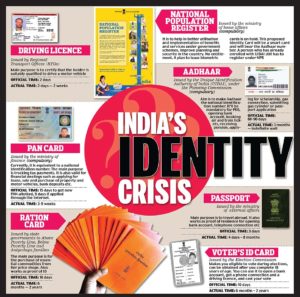
Aadhaar card is not a proof of citizenship !!!

It is a common misconception among Indians that Aadhar Card is considered as a proof of citizenship.
In Chapter-3, Clause-9
“The Aadhaar number or the authentication thereof shall not, by itself, confer any right of, or be proof of, citizenship or domicile in respect of an Aadhaar number holder.”
This clearly explains Aadhaar is not a proof of citizenship or domicile.

What about Citizenship?

Aadhaar crisis
Source: Daily Mail
Under citizenship laws, a person is an Indian by birth if he/she is born in India on or after January 26, 1950, but before July 1, 1987, so in that case, only your birth certificate should suffice as Indian Citizenship proof. If a person is born after July 1987, he or she can claim citizenship if either of the parents is a citizen of India. So in this case, own birth certificate along with one your parents birth certificate may suffice as Indian Citizenship proof. For all born in India on or after December 3, 2004, they can claim citizenship by birth only if both parents are Indians, or if at least one of the parents is an Indian citizen and the other is not an illegal immigrant at the time of birth in India. So along with one’s birth certificate, both parents citizenship proofs would be required which shall be again subjected to the above conditions.
Documents such as Vote Id Card and Passport may be considered citizenship proof with the birth certificate as per above-mentioned cases. A Driving License, Caste certificate, Ration Card is no valid proof of citizenship.
Share and Subscribe to Sulthan’s Monologue by Email for more interesting updates. Share with your friends.  Thank you.

What is BNA ?

0

ATM

BNAs are the new generation, secure ATMs that have the multifunctional ability to offer deposits or dispense transactions of bundles notes up to 200 mixed notes after having counted and authenticated them in 8-10  seconds. The customer is first asked to verify the amount of deposit to ensure that it tallies and then it is credited into his/her account immediately. It completely takes away human intervention required until now and enables users to manage and control the same.

BNA are nothing but Cash deposit machines

The initial attempt at automating Deposits included certain types of ATMs which allowed users to deposit cash via envelopes. The money would then be counted, verified and credited later. This never really gave customers a sense of security regarding their deposit. The potential impact of BNAs on currency circulation and customer service was seen as significant for the RBI to subsidize the cost of BNAs up to 50 per cent for urban areas (and even  75 per cent in semi-urban areas).

BNA / Cash deposit machine locators for Indian banks:

Axis Bank deposit machine locator

Bank of Baroda deposit machine locator

Dena Bank deposit machine locator

Federal Bank deposit machine locator

ICICI Bank deposit machine locator

IDBI Cash deposit machine locator

Indian Bank deposit machine locator

IndusInd Bank deposit machine locator

Kotak Mahindra Bank deposit machine locator

Punjab National Bank deposit machine locator

State Bank of India deposit machine locator

Yes Bank deposit machine locator

Understand Plagiarism and How to avoid it?

0
Plagiarism is the act of taking another person’s writing, conversation, song, or even idea and passing it off as your own. This includes information from web pages, books, songs, television shows, email messages, interviews, articles, artworks or any other medium. Whenever you paraphrase, summarize, or take words, phrases, or sentences from another person’s work, it is necessary to indicate the source of the information within your paper using an internal citation. It is not enough to just list the source in a bibliography at the end of your paper. Failing to properly quote, cite or acknowledge someone else’s words or ideas with an internal citation is plagiarism.

What is an Internal Citation?

An internal, in-text or parenthetical citation refers to the practice of giving credit to an author, singer, or speaker by citing their words/ideas within your paper. This internal citation is then referenced at the end of your paper in your ‘Works Cited’ list (see below).
Internal citations are sometimes called parenthetical citations because they’re enclosed by parentheses. It’s helpful to think of internal citations as a kind of “tag” indicating what you’ve borrowed from an author. For every sentence, phrase or idea you borrow you must “tag” it with an internal citation. Each internal citation is then listed alphabetically in a ‘Works Cited’ page at the end of your paper.
Borrowing the work’s structure, format or style without giving credit is also considered plagiarism. It is important to remember that merely changing the wording is not enough.

What is a Works Cited Page?

A Works Cited page, also known as a bibliography or reference list, comes at the end of your paper listing all the works (books, articles, Internet sites, etc.) you’ve quoted, paraphrased or otherwise used to create your paper. The citations are usually listed alphabetically by the authors’ last names and typically include the name of the publication, the publisher/date of publication, and the volume, issue and pages if applicable. How works are internally cited and how the citations are arranged in the “Works Cited” page will be determined by the Style Guide (MLA, APA and Turabian) specified by your teacher.

What is ‘Common Knowledge’?

Common knowledge needs no internal citation in a paper. Common knowledge includes information that is considered a well-established fact verifiable in five or more sources. It also includes common sayings and proverbs (“look before you leap”) and historical dates, places and events.
An example of common knowledge needing no citation: Jane Austen was born in 1775.

What is a ‘Unique Phrase’?

A unique phrase does need an internal citation. A unique phrase is one which is coined by an author and used commonly by other authors in a specific genre or discipline, but it is not necessarily a common fact or phrase used by everyone.
 
(source:http://www.lib.usm.edu/legacy/plag/whatisplag.php)